Seoul Street Food Markets Without a Tour: Can You Do It on Your Own?

Yes, you can genuinely do Seoul street food markets on your own. Four markets, Gwangjang, Mangwon, Namdaemun and Tongin, are all a short subway ride apart, most stalls now post their prices in plain sight, and none of them require a guide to enter or order from. The honest qualifier is that a market this size rewards local knowledge: which of Gwangjang's 200-plus stalls is worth the wait, which dish to order blind and which to skip. Below is the real math, four market-by-market breakdowns with hours and stall prices, the posted-price rule that followed a real overcharging scandal, and the specific cases where paying for a guide still earns its price. If you'd rather have someone else handle it, compare our small-group market tours before you decide.
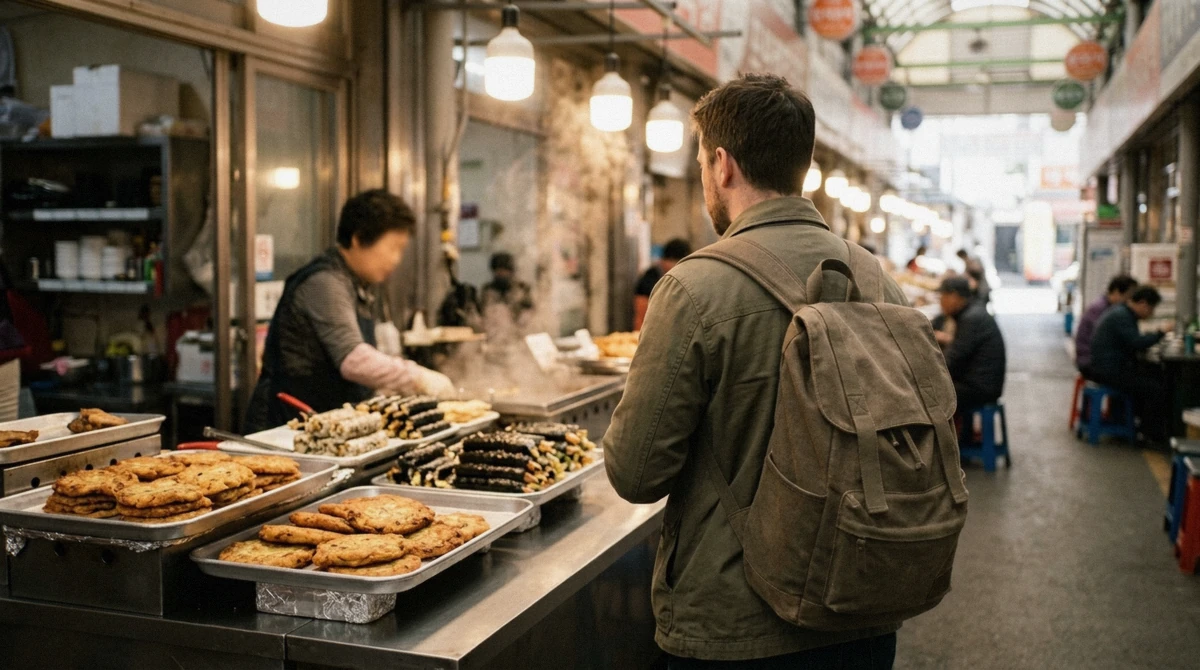
Quick answer
Yes, you can visit Seoul's street food markets without a tour. Four markets, Gwangjang, Mangwon, Namdaemun and Tongin, are all subway-accessible, cash-and-card friendly, and open to walk-in visitors with no guide required. The honest qualifier: knowing which stall to trust takes local knowledge a first-time visitor doesn't have.
Key takeaways
- Verdict: fully DIY-able, no permit or guide requirement at any of the four core markets
- Real cost: a filling solo day across two markets runs about ₩20,000-25,000 (~$14-17), plus subway fares
- What a tour genuinely adds: English ordering, spice calibration, and the confidence to order dishes like yukhoe or sundae blind
- Biggest safety caveat: order only from stalls with visibly posted prices, especially at Gwangjang, after the late-2025 overcharging scandal
- Who should DIY: confident eaters with two spare days; who shouldn't: anyone on a single tight afternoon who wants maximum tastings per hour
- Namdaemun and Gwangjang's general shops are both closed on Sundays; food stalls at Gwangjang stay open daily
The Short Answer: Do You Need a Tour?
No permit, license or guide requirement blocks an individual from walking into any of Seoul's street food markets and ordering. Gwangjang, Mangwon, Namdaemun and Tongin are all public markets, open to anyone who shows up during trading hours, and none of them gate entry the way a national park or a licensed activity might.
The one rule worth knowing before you go: since late 2025, in response to a real overcharging incident, more Gwangjang stalls display their prices openly, and the practical safety rule for any solo visitor is simple, order only from a stall with a price you can see. We cover that in full further down this page.
Compare this against the guided Seoul food tour options if the math below still tips you toward one.
DIY vs Tour at a Glance
Numbers per adult, checked July 2026, converted at ₩1,440 per dollar. Last verified: August 2026. If you're still weighing the decision itself rather than the logistics, our fuller is a food tour in Seoul worth it breakdown covers the honest downsides on both sides.
| On your own | With a tour | |
|---|---|---|
| Cost per person | ₩20,000-25,000 (~$14-17) for two markets, plus subway | $41-$138, most tours $65-$95 |
| What you can reach | Every public stall at all four markets | The same stalls, plus the ones your guide singles out as worth trying |
| Ordering | Point, translation app, or the little Korean you know | Guide orders and explains every dish in English |
| Safety & backup | Order only from posted-price stalls; no one to flag a bad one | Guide has already vetted the route |
| Time & flexibility | Fully open-ended, linger wherever you like | Fixed 1.5-4 hour schedule, set pace |
| Best for | Confident eaters, groups of 2+, two spare days | First-timers, solo travelers, tight schedules |
The Four Markets You Can Walk on Your Own
All four sit on Seoul's subway network, none more than about 30 minutes apart. Pins mark the main food entrance at each market, not the full perimeter.
The Four Markets, One by One
Gwangjang Market
Seoul's oldest market, and the one most visitors mean when they say "street food market." Food stalls run roughly 09:00 to 23:00 daily; the general shops selling fabric and goods close at 19:00 and shut entirely on Sundays, but the food alley stays open every day of the week. Reach it via Jongno 5-ga Station, exit 8 or 9.
- Bindaetteok mung-bean pancake: ₩5,000 (~$3.50), the market's signature dish
- Yukhoe raw-beef tartare bibimbap at Buchon Yukhoe in Yukhoe Alley: ₩15,000 (~$10.40)
- Gohyang Kalguksu, stall 70, the knife-cut noodle stand from Netflix's Street Food: Asia, opens 09:00, closed Mondays and the last Sunday of the month
- Bibimbap: ₩6,000 regular, ₩7,000 in a hot stone bowl
Mangwon Market (Mukja Golmok)
A neighborhood food alley loved by young locals and largely missed by tourists, in western Seoul. Most stores run roughly noon to 21:00. Stalls here post prices under an anti-price-gouging agreement, checked August 2026.
Reach it via Mangwon Station, exit 2.
- Fried chicken cup: ₩5,000
- Kalguksu with dumplings: ₩7,000
- Tteokgalbi (grilled short rib patty): ₩7,000
- Plain snacks: ₩4,500
Namdaemun Market
Seoul's largest traditional market, closed Sundays. Kalguksu Alley, also called Gourmand Alley, runs 05:00 to 21:00, unusually early hours built around the market's wholesale trade. Reach it via Hoehyeon Station, exit 5.
- Kalguksu, cold noodle and bibimbap combo: ₩8,000
- Hotteok sweet pancake: ₩1,500 (~$1), the cheapest famous bite in the city
Tongin Market Dosirak Cafe
A different format entirely: ₩5,000 buys 10 brass yeopjeon coins and a lunchbox tray, and you fill the tray stall by stall inside the market, most dishes cost 1-2 coins, rice or soup adds ₩1,000. It runs Tuesday to Sunday, 11:00 to 15:00, and closes Monday, so plan around that window specifically. The coin system doubles as a built-in budget cap, once the tray is full or the coins are spent, the meal is done, which makes it one of the easiest markets for a first-time solo visitor to navigate without overspending or over-ordering.
What a DIY Market Day Really Costs
Line items for a solo visitor covering Gwangjang and one more market in a day, July 2026 rates.
| Item | Price (₩) | Price (USD) |
|---|---|---|
| Bindaetteok at Gwangjang | ₩5,000 | ~$3.50 |
| Bibimbap at Gwangjang | ₩6,000 | ~$4.20 |
| Kalguksu combo at Namdaemun or Mangwon | ₩7,000-8,000 | ~$4.90-5.55 |
| Two subway rides, T-money (₩1,550 base fare per ride since June 28, 2025) | ₩3,100 | ~$2.15 |
| Filling solo day across two markets | ₩20,000-25,000 | ~$14-17 |
Party size changes the math more than anything else. A solo eater's biggest fixed cost is the subway fare, which doesn't split, so the per-person total is nearly identical for a solo traveler or a pair. Groups of three or more start saving meaningfully because they can order fewer, larger dishes to share instead of one portion each, splitting a bindaetteok pancake or a bowl of kalguksu three ways rather than each ordering their own.
Compare the DIY total against the guided $41 Namdaemun tour and the gap narrows for a solo traveler: DIY runs $14-17 in food plus subway, the cheapest guided tour is $41, so for one person the real gap sits closer to $25, not the $80-plus premium you'd see against the $95 flagship. That narrower gap is worth knowing if convenience matters even a little to you. For direct comparison, the guided tour side of this math, tour by tour, is in our full cost breakdown.
When Skipping the Tour Is the Right Call
No hedging, DIY is genuinely the right call when:
- You're comfortable pointing at a menu, using a translation app, or ordering with basic Korean
- You're traveling in a group of two or more and can share dishes
- Budget matters more than time, and you have two spare days to spread across four markets
- You've already researched or scouted a few specific stalls you want to try, rather than needing a guide to choose for you; our ranked rundown of every market dish is a good scouting list
None of these require any special skill beyond patience and a working phone. The markets are not confusing once you're standing in them, the confusion mostly happens beforehand, deciding where to start.
When a Tour Is Genuinely Worth It
The honest cases for booking, from someone who runs these markets for a living and still thinks DIY is fine for the right traveler:
- First-timers who don't read Korean and want the ordering handled, so a plate of yukhoe or sundae isn't a gamble
- Anyone who wants spice calibrated for them; guides know which stalls make a milder version on request
- Travelers who want to know which of Gwangjang's 200-plus stalls to trust this week, not last year
- Back-alley or lesser-known stops a first-time visitor is unlikely to find alone, the kind our Gwangjang chef-led tour and Mangwon neighborhood tour are built around
Both run as small-group tours with live availability: the chef-led Gwangjang tasting and the Mangwon neighborhood crawl.
Watch the Prices: the Overcharging Problem
In late 2025, a Korean YouTuber filmed a Gwangjang stall overcharging a tourist, and the video spread widely enough to force a real response. Since then, more stalls across the market display their prices openly rather than quoting on the spot, and it's now the single most useful habit for a solo visitor: order only from a stall where the price is written down where you can see it before you order.
The practical rule is simple. If a stall has no visible price board or menu, ask the price before ordering, not after, and if it hesitates to give you a straight answer, walk to the next stall, there are hundreds. Mangwon Market runs a similar posted-price agreement to prevent the same problem, checked August 2026, which is one more reason it's a comfortable market for a first solo visit.
A Simple DIY Market Morning Plan
The route that works best without a guide, built around Tongin's coin program and a Gwangjang lunch.
-
10:30
Gyeongbokgung Station or nearby, subway to Tongin Market
Arrive after 11:00 when the Dosirak Cafe opens
-
11:00
Tongin Market Dosirak Cafe
₩5,000 for 10 coins and a tray, fill it stall by stall, closed Mondays
-
12:00
Subway to Jongno 5-ga
About 20-25 minutes with one transfer
-
12:30
Gwangjang Market lunch
Bindaetteok first, then yukhoe bibimbap at Buchon Yukhoe if you're ready for it
-
14:00
Wander the food alley
Order only from stalls with posted prices; ask before ordering if none is visible
-
15:00
Exit toward the next stop
Both markets done for under $20 in food, plus subway fares
Frequently Asked Questions
Can you visit Seoul street food markets without a tour?
Yes. Gwangjang, Mangwon, Namdaemun and Tongin are all public markets with no guide requirement. A tour adds ordering help and stall knowledge, not access.
Is it cheaper to visit Seoul markets yourself?
Yes, meaningfully. A filling solo day across two markets runs about ₩20,000-25,000 (~$14-17) plus subway fares, against $41-$138 for a guided tour covering similar ground.
Is it safe to eat at Seoul's markets without a guide?
Yes, with one habit: order only from stalls with a visible posted price, especially at Gwangjang, following the late-2025 overcharging incident that pushed more stalls to display prices openly.
What's the entry fee for Gwangjang or Namdaemun market?
None. All four markets are free to enter; you only pay for what you eat. Tongin Market's Dosirak Cafe is the exception, where ₩5,000 buys a coin tray rather than a fixed entry ticket.
Can beginners handle Gwangjang Market alone?
Yes, if you stick to posted-price stalls and don't mind pointing or using a translation app. First-timers who want the ordering and dish selection handled for them tend to prefer a guided route instead.
Which Seoul market is easiest to visit without a tour?
Namdaemun and Mangwon, both of which run clear posted prices and straightforward stall layouts. Gwangjang is doable too, but its 200-plus stalls make a first-timer's choice harder without any local steer.
Can you get to all four markets by subway in one day?
Yes, they're all on Seoul's subway network and no more than about 30 minutes apart, though pairing two markets in a day, rather than all four, leaves more time to actually eat at each one.