Korean Food Etiquette for Tourists: What You Actually Need to Know
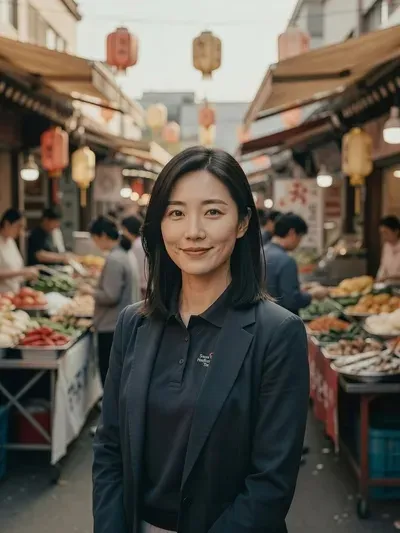
You don't need to memorize a rulebook to eat well and respectfully in Seoul, and nobody expects a visitor to get every custom right. I've watched thousands of first-time guests worry about this before a tour and relax within the first ten minutes once they see how forgiving the market culture actually is. A few habits do matter, chopsticks and rice bowls chief among them, and knowing how ordering actually works at a stall saves real confusion. This guide walks through the Korean food etiquette for tourists that actually matters, how a market order goes from pointing to paying, the honest spice picture, and where vegetarian and halal travellers genuinely stand. Any prices below use July 2026 conversion, US$1 ≈ ₩1,440.
Quick answer
Korean food etiquette for tourists comes down to a handful of habits: use the spoon for rice and soup, never stand chopsticks upright in a rice bowl, keep the bowl on the table rather than lifting it, and let the eldest person at the table start first. Nobody expects a visitor to get it all right, and the market culture is genuinely forgiving of mistakes.
Key takeaways
- Rice and soup are eaten with the spoon, chopsticks are for banchan and meat, the opposite of Japan
- Never stand chopsticks upright in rice; it mirrors an offering to the dead
- Keep the rice bowl on the table; lifting it to your mouth is fine elsewhere in Asia, not here
- Tipping is not expected anywhere in Korea, including on tours
- Market benches are communal, squeezing in beside strangers is normal, not rude
- All tours on this site run in English, so the guide handles ordering for you
The Rules That Actually Matter
A short table of the habits worth knowing before your first meal, with the reasoning behind each one.
| Rule | Why | How wrong it looks |
|---|---|---|
| Use the spoon for rice and soup | Chopsticks are reserved for banchan and meat in Korean dining | Eating rice with chopsticks the whole meal reads as unusual, not offensive, just noticeably foreign |
| Never stand chopsticks upright in rice | It mirrors the way food is offered at ancestral memorial rites | This one genuinely unsettles older Koreans if they notice it |
| Keep the bowl on the table | Lifting it to your mouth is normal in Japan and China, not here | Reads as slightly careless table manners rather than rude |
| Two hands for pouring and receiving | A sign of respect when an elder is involved | One-handed pouring toward an elder looks careless, not offensive, to most people |
| Let the eldest person start first | A basic hierarchy custom at any shared Korean table | Digging in first is a minor faux pas most Koreans will simply not mention |
None of these are hard rules that will draw a scolding; Koreans are used to visitors, and market vendors in particular have seen every variation of table manners you can imagine. The chopsticks-upright rule is the one worth actually remembering, since it's the single gesture most likely to land wrong.
How Ordering Works at a Market Stall, Step by Step
This is the part guests ask me about most, so here's exactly how it goes at a typical Gwangjang or Namdaemun stall. You walk up to a counter, usually open-air, with the food already cooking or laid out in trays behind glass. Most stalls post prices now, a habit that firmed up after a late-2025 overcharging incident made the rounds on Korean YouTube and pushed vendors toward visible signage, worth checking before you order if you're on your own rather than with a guide.
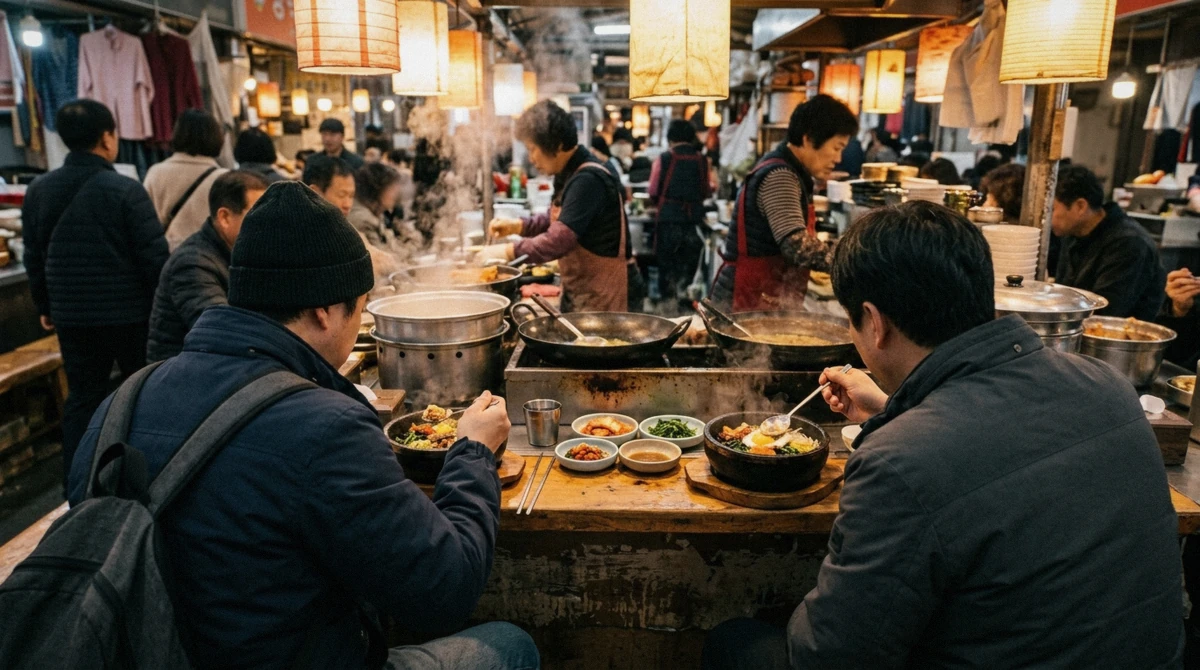
You point at what you want, or say the dish name if you know it; English gets you a smile and a nod more often than not, since food-tour traffic has made the busiest stalls used to visitors. Payment usually happens on the spot, sometimes before you eat, sometimes after, and the vendor will signal which by holding out a hand or gesturing to a card reader. On a guided route like the chef-led Gwangjang tasting, all of this is handled for you, which is exactly why nervous first-timers book it. Then you find a seat, which at a busy stall usually means a shared bench with other diners already eating; squeezing onto that bench is completely normal, not an intrusion. Eat, then either bus your own tray to a bin near the stall or hand your used wrappers and plates back to the vendor directly, since public bins are genuinely rare in Korean markets.
Chopsticks, Spoons and the Rice Bowl
Korea splits utensil duty differently than its neighbors, and getting this backwards is the most common visible mix-up. Rice and soup are eaten with the spoon, always, while chopsticks handle banchan, the small side dishes, and meat. That's the reverse of Japan, where chopsticks do everything and a spoon barely appears.
The other genuine difference is the bowl itself: in Japan and China it's normal, even polite, to lift a rice bowl to your mouth; in Korea the bowl stays on the table the entire meal, and lifting it looks distinctly foreign to a Korean eye. And never, under any circumstance, stand your chopsticks upright in a bowl of rice: it visually echoes incense offered at ancestral memorial rites, and it's the one gesture that can genuinely make an older Korean pause. Rest chopsticks flat on the table edge or a chopstick holder instead.
Drinking Etiquette
If soju or makgeolli comes up during your tour, a few habits are worth knowing even as a first-timer. Pour and receive with two hands whenever an older person is at the table, one hand supporting the glass, the other lightly on your forearm or the bottle. Turn slightly away when actually drinking in front of an elder, a small gesture of deference rather than a strict rule. And never refill your own glass; someone else at the table pours for you, and you return the favor for them; a glass left empty in front of you is usually noticed and topped up within a minute or two. Guides on group tours won't expect a visitor to navigate this perfectly, and drinking is entirely optional on every tour route.
Makgeolli, the cloudy rice wine that shows up alongside market tastings, is traditionally shaken or stirred gently before pouring since the sediment settles to the bottom, and it's served in a shallow bowl or small metal cup rather than a wine glass. Soju, the clear grain spirit, is the one most bound up in the two-hands rule, since it's usually drunk in a group setting with a clear hierarchy at the table. None of this comes up if you'd rather stick to water or a soft drink, and declining a pour is always accepted without any pressure to explain why.
How Spicy Is Korean Street Food, Honestly
Spice tolerance is the question I field second-most after chopsticks, and the honest answer varies a lot by dish rather than by the cuisine as a whole. Hotteok and bindaetteok carry no heat at all, they're a sweet pancake and a savory griddled one respectively. Odeng broth is genuinely mild, closer to a warm savory stock than anything spicy.
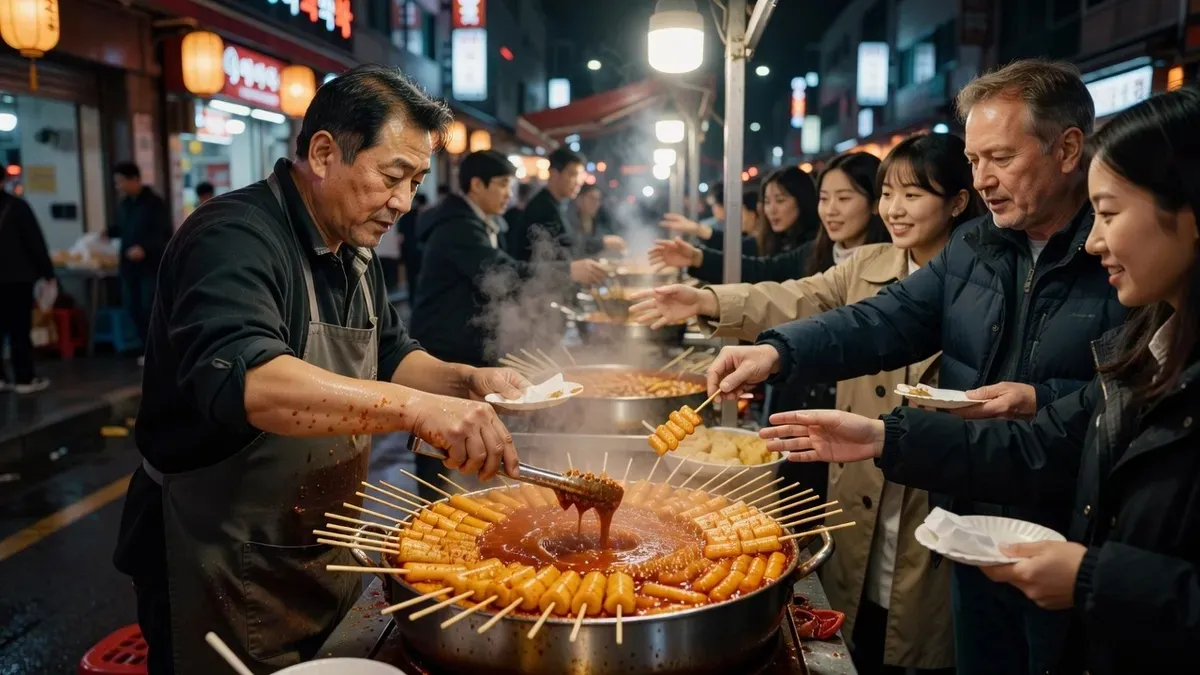
Standard tteokbokki, on the other hand, is a real medium heat, not a token warning label, and it's the dish most likely to catch a spice-sensitive visitor off guard. If you want it toned down, the phrase to know is 'deol maepgae,' meaning less spicy, and most stalls will happily adjust. On a guided tour this is even easier: your guide flags the spicy stops in advance and can ask the vendor to go lighter on your behalf, so spice tolerance is genuinely not a reason to skip a food tour.
For where every market dish sits on the heat scale, our dish-by-dish tasting guide ranks them all.
Vegetarian, Halal and Allergies: the Honest Version
This is worth stating plainly rather than glossing over, because Korean street food is genuinely difficult terrain for vegetarian and halal travellers. Kalguksu and many broths that look clear or vegetable-based are actually simmered on dried anchovies, a trap that catches even careful vegetarians who assume a light-colored broth means no meat. Eomuk, fish cake, also turns up folded into dishes that read as vegetarian at a glance, so it's worth asking specifically rather than trusting appearance. Halal options at traditional markets are genuinely scarce; Gwangjang in particular has almost no certified halal stalls. Bindaetteok is the safest ask of the market's signature dishes, since it's mung-bean based, though it's still worth confirming the frying oil directly with the vendor rather than assuming, since the same pan sometimes fries meat-based items back to back.
Even mayak gimbap, which looks like a straightforward rice-and-vegetable roll, sometimes hides a thin layer of pickled radish prepared in a shared kitchen alongside meat dishes, so a strict vegetarian should still ask rather than assume from the ingredient list alone. The honest pattern across Korean market food is that broths and shared frying oil carry more hidden animal product than the dish names suggest, more so than any single ingredient you can spot by eye.
The honest fix, if dietary rules aren't flexible, is the private tour at $79, which builds the entire route around your restrictions instead of working within a fixed group menu built for a general audience. On a group tour, flag allergies and dietary needs to your guide as soon as you meet, and they'll steer you around problem dishes as the route unfolds.
First Tour Nerves: What First-Timers Worry About
A quick look at what actually crosses guests' minds before their first market tour, and what tends to happen once they're there.
| Worry | The reality | What helps |
|---|---|---|
| I'll order something wrong or embarrass myself | Market vendors have seen every version of a confused visitor and simply aren't fazed | On a guided tour, ordering is entirely handled for you |
| I'll get something too spicy without knowing | Tteokbokki is the real medium-heat dish; most others are mild to none | Ask for 'deol maepgae' or let your guide flag the spicy stops |
| I won't know the table manners and it'll be obvious | The chopsticks-upright rule is the only one that reliably lands wrong | Follow the group and mirror what locals at the next table do |
| Eating alone at a stall will feel awkward | Communal benches are normal, and solo diners are common at market stalls, not conspicuous | Sit where there's an open seat, nobody expects conversation |
| I won't know when or how much to tip | Tipping isn't expected anywhere in Korea, including on tours | Skip it entirely, it can actually cause confusion if offered |
Which Tours Suit Nervous First-Timers
If any of the worries above sound familiar, a couple of routes are built to smooth them out further. And if you're still deciding whether to book at all, our honest look at whether a Seoul food tour is worth it weighs both sides.
- Private Seoul food tour, $79, 3 hours: your own guide, your own pace, and the route can be shaped entirely around dietary rules or spice sensitivity from the start.
- Seoul street food market tour, $73, 2 hours: Seoul's most-reviewed walk, a social small-group format where most guests are first-timers too, so nobody stands out as the nervous one.
Frequently Asked Questions
Do I need to tip on a Korean food tour?
No. Tipping is not expected anywhere in Korea, including on tours, and offering it can actually cause confusion rather than seeming generous.
Can I ask for my food to be made less spicy?
Yes. The phrase 'deol maepgae' means less spicy, and most stalls will adjust on request. On a guided tour, your guide can make the request for you in advance.
Is it rude to leave food on my plate in Korea?
Not seriously, though finishing a small tasting portion is easy and appreciated at a market stall where portions are already bite-sized. Nobody will comment if you leave something you genuinely didn't enjoy.
Is it okay to eat while walking through a market?
Yes, eating while walking is normal and expected in market alleys. It's frowned on in the subway, though, so finish street food before you head underground.
What do I do with my trash after eating at a stall?
Public bins are genuinely rare in Korean markets. Hand wrappers, sticks and used plates back to the stall vendor rather than looking for a bin, that's the normal disposal method.
Is it awkward to sit at a shared bench with strangers?
No, it's completely normal. Market benches are communal, and squeezing onto one beside other diners at a Gwangjang stall is standard practice, not an intrusion.
Do I need to speak Korean to order food?
No. Pointing works at most stalls, and busy market vendors are used to English-speaking visitors. On any of our food tours with a local Seoul guide, the guide orders for you in Korean, so language is never a barrier.